
The Revenge of the Building Codes
Dec 13, 2025
The Rules Architects Think They Can Ignore… Until They Can’t The Moment of Truth
There’s a moment every architect experiences—usually right after a brilliant presentation—when the building inspector leans forward, squints at your beautiful floor plan, and asks:
“…Did you measure this corridor? Carefully?”
And in that moment, the real truth surfaces: no matter how flawless the design looks on screen, building codes hold the final vote.
They’re the silent partners in every project. The invisible supervisors. The rules that sit quietly in the background…until they don’t.
And when they come for revenge, they arrive with tape measures, fire‑rating tables, zoning maps, and a level of confidence rarely matched by humans.
A Quick Word on CE (Because It Really Does Matter Here)

The Fastest Way Architects Avoid Code Disasters Isn’t Luck—it’s Staying Current
Building codes shift, interpretations evolve, enforcement tightens, and new technologies change what compliance even means.
Continuing Education (CE) isn’t just checking a requirement box. It’s what transforms code from a frustrating obstacle into a design tool—one that helps architects avoid redesigns, missteps, ADA surprises, and late‑stage heartbreak.
CE isn’t about memorizing rules; it’s about understanding how design, construction, and regulation interact. It turns “tricky” requirements into predictable patterns, helping architects design confidently in a landscape where codes evolve as quickly as building materials and client expectations.
When the Drawing Board Forgets the Rulebook Every architect has had a design that felt perfect. The proportions worked. The circulation flowed. The spaces felt intentional.
And then you submit it for review.
Suddenly, the code reviewer points to one tiny rectangle—a restroom door, a stair landing, a fire‑rated wall—and calmly explains that the entire plan must shift.
In seconds, your masterpiece turns into a puzzle with pieces that no longer fit.
Buildings aren’t denied because they’re ugly. They’re denied because they’re one inch off, one percentage point over, or one assumption away from noncompliance.
That’s the revenge of building codes: they wait quietly until you’re fully attached to your design…before they strike.
“Did You Know?” — Code Changes That Catch Even Experienced Architects Off Guard Did you know a city can change its zoning map with one community vote? Or that a new fire regulation can instantly nullify your open‑staircase concept? Or that a single change in accessibility law can alter every restroom on the floor?
Most architects don’t realize how often rules evolve:
-
Height limits can tighten after one noise complaint.
-
Setback requirements can shift when a city updates flood maps.
-
Fire codes change when new materials enter the market.
-
Energy codes expand as technology advances.
-
ADA interpretations shift after landmark court cases.
The codebook of 2018 is not the codebook of 2026.
The ADA Surprises No One Sees Coming Accessibility issues rarely appear dramatic—until inspection day.
A grab bar mounted an inch too high. A turning radius reduced by a decorative planter. A ramp slope that looked “close enough.” A countertop edge extending into the maneuvering space.
And suddenly the inspector is shaking their head.
Accessibility flaws aren’t design failures—they’re assumption failures.
Fire Ratings: The Silent Plot Twist That Changes Everything
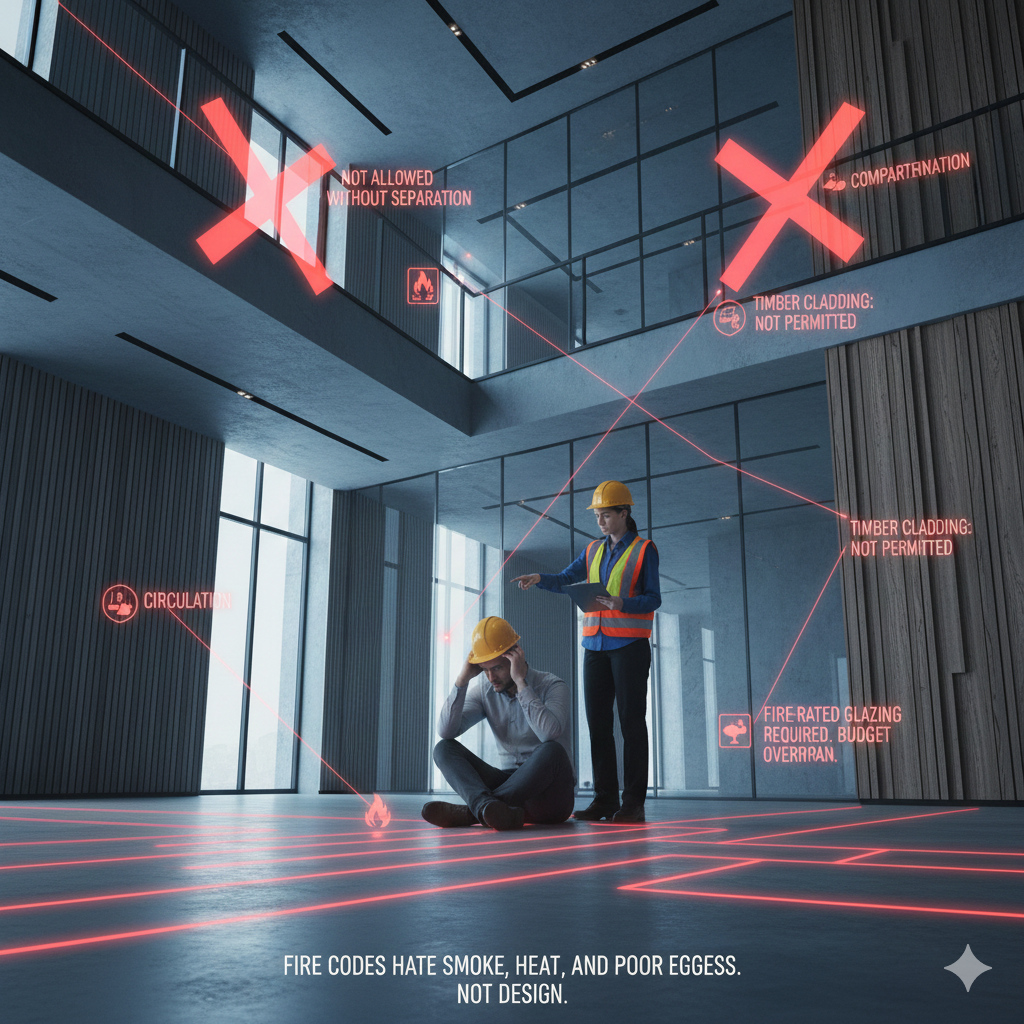
Fire Codes: The Rules That Rewrite Design at the Worst Possible Time
Fire codes have a talent for appearing when it’s least convenient.
The open mezzanine you loved? Not allowed without separation. That gorgeous timber cladding in the corridor? Not permitted on that wall type. Your stunning glass partition? Must be fire‑rated—at a cost you never budgeted for.
Fire codes don’t hate design. They hate smoke, heat, and poor egress planning—in that order.
Zoning Setbacks: The Silent Assassins of Perfect Floor Plans
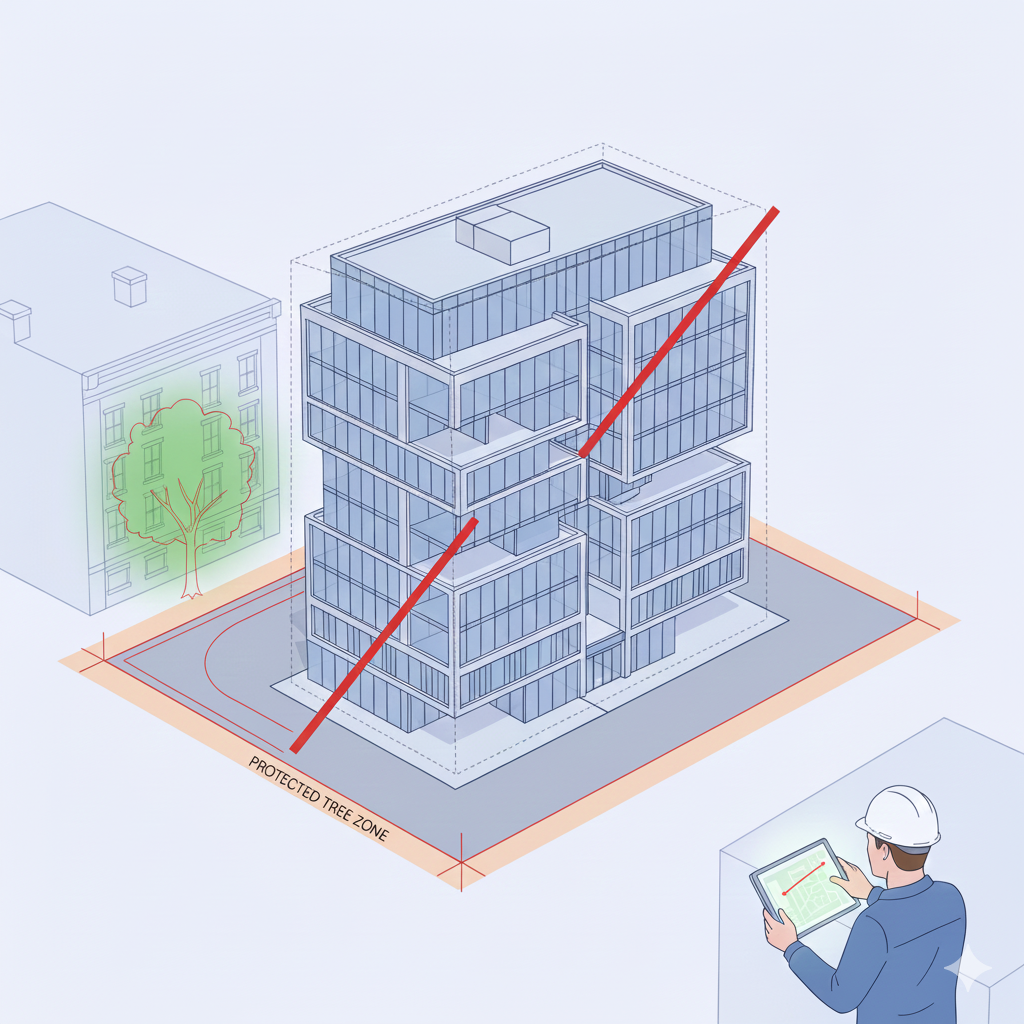
Zoning Setbacks: The Silent Assassins of Perfect Floor Plans
Setbacks look innocent—just a few lines on a survey, right?
Until one of them cuts straight through the middle of your building footprint.
Suddenly, your perfect massing must shrink, rotate, or split. Your vision becomes a negotiation with invisible boundaries drawn decades ago.
You don’t fight setbacks. You shape‑shift around them.
Inspection Day: The Moment of Truth

Inspection Day: The Moment of Truth
Inspection day is where theory, ambition, and reality all shake hands—usually awkwardly.
Inspectors walk in with:
-
fresh eyes
-
precise tools
-
zero emotional attachment
And if something is wrong, it is simply wrong.
Even a flawless BIM model can fail inspection if a single dimension shifts during construction or if one substitution happens on‑site without notice.
In a world where every millimeter matters, inspection day becomes the ultimate test of alignment between design intent and built reality.
How CE Saves Architects From Code Revenge
In a world where codes tighten, interpretations shift, sustainability rises, and construction evolves, Continuing Education becomes far more than a formality.
It’s a designer’s shield and a project’s insurance policy.
CE empowers architects to predict problems long before they reach the inspector’s desk, to design with awareness instead of assumption, and to turn the rulebook from an adversary into an ally.
Building codes may feel like revenge, but CE transforms them into strategy. And the architect who understands the code doesn’t just comply with it—they design smarter because of it.
Never Miss the Latest in CE Trends!
Sign Up for New information about CE classes delivered to your inbox.
We hate SPAM. We will never sell your information, for any reason.