Parametric and Curved Designs: Geometry by Algorithm, Reality by Engineer
Dec 13, 2025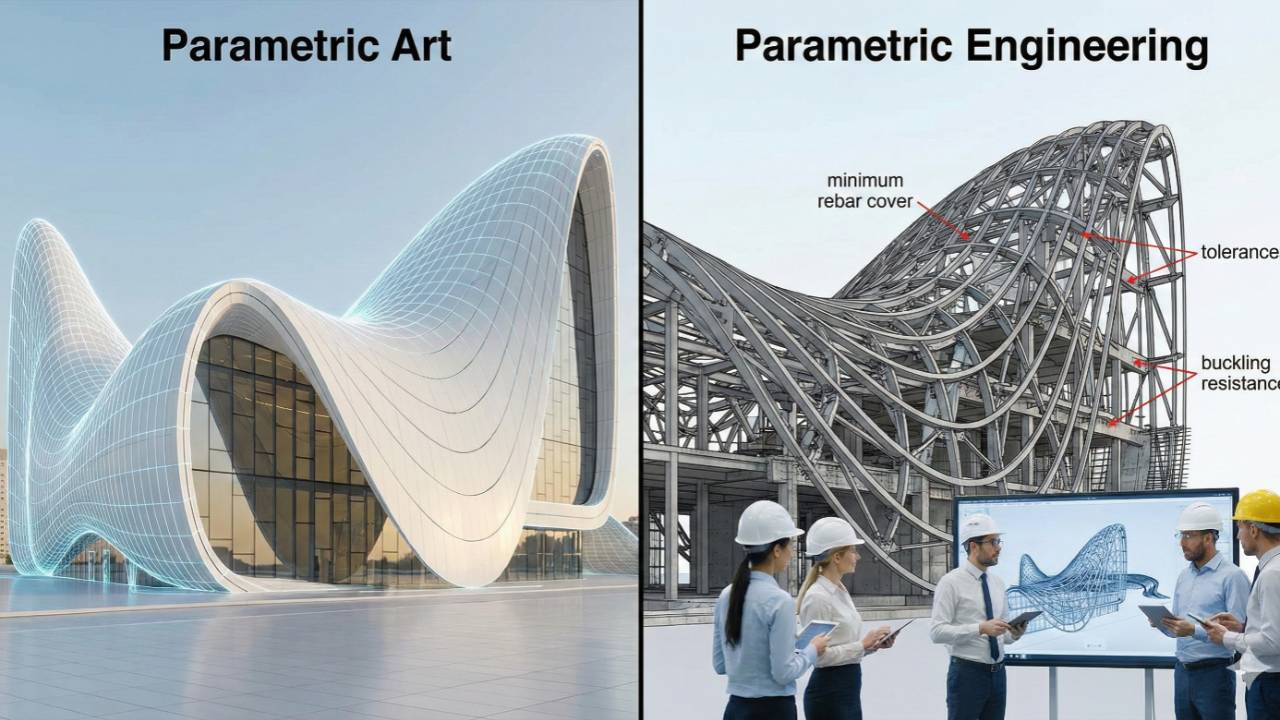
The Rise of Parametric Design
Parametric design has opened the door to stunning forms — twisted towers, rippling façades, biomorphic curves. These shapes are easy to generate in software, where algorithms can produce breathtaking geometries with a few clicks. The digital renderings look effortless, futuristic, and inspiring.
But software does not think about the realities of construction. It does not account for:
-
minimum rebar cover
-
slab thickness limits
-
constructability
-
tolerances
-
mechanical routing
-
fire‑rating requirements
-
buckling resistance
Engineers as Translators
The result? Engineers become the translators — turning algorithmic art into real‑world building systems. They bridge the gap between digital imagination and physical reality, ensuring that every curve, twist, and ripple can actually stand, perform, and endure.
The Hidden Work Engineers Do
Behind every parametric masterpiece lies a series of invisible tasks:
-
simplify complex geometry without altering the aesthetic
-
redesign systems to match available materials
-
simulate performance under load
-
coordinate every bend and break with fabricators
-
analyze wind amplification on curved forms
-
resolve torsion created by non‑linear geometry
Each step requires precision, creativity, and collaboration. Without this hidden work, the most beautiful designs would remain unbuildable concepts.
Art vs. Engineering
Parametric art is beautiful. Parametric engineering is heroic.
It is the engineer’s role to transform algorithmic geometry into structures that respect physics, safety codes, and long‑term performance. The beauty of parametric design lies not only in its visual impact but in the engineering discipline that makes it possible.
Never Miss the Latest in CE Trends!
Sign Up for New information about CE classes delivered to your inbox.
We hate SPAM. We will never sell your information, for any reason.